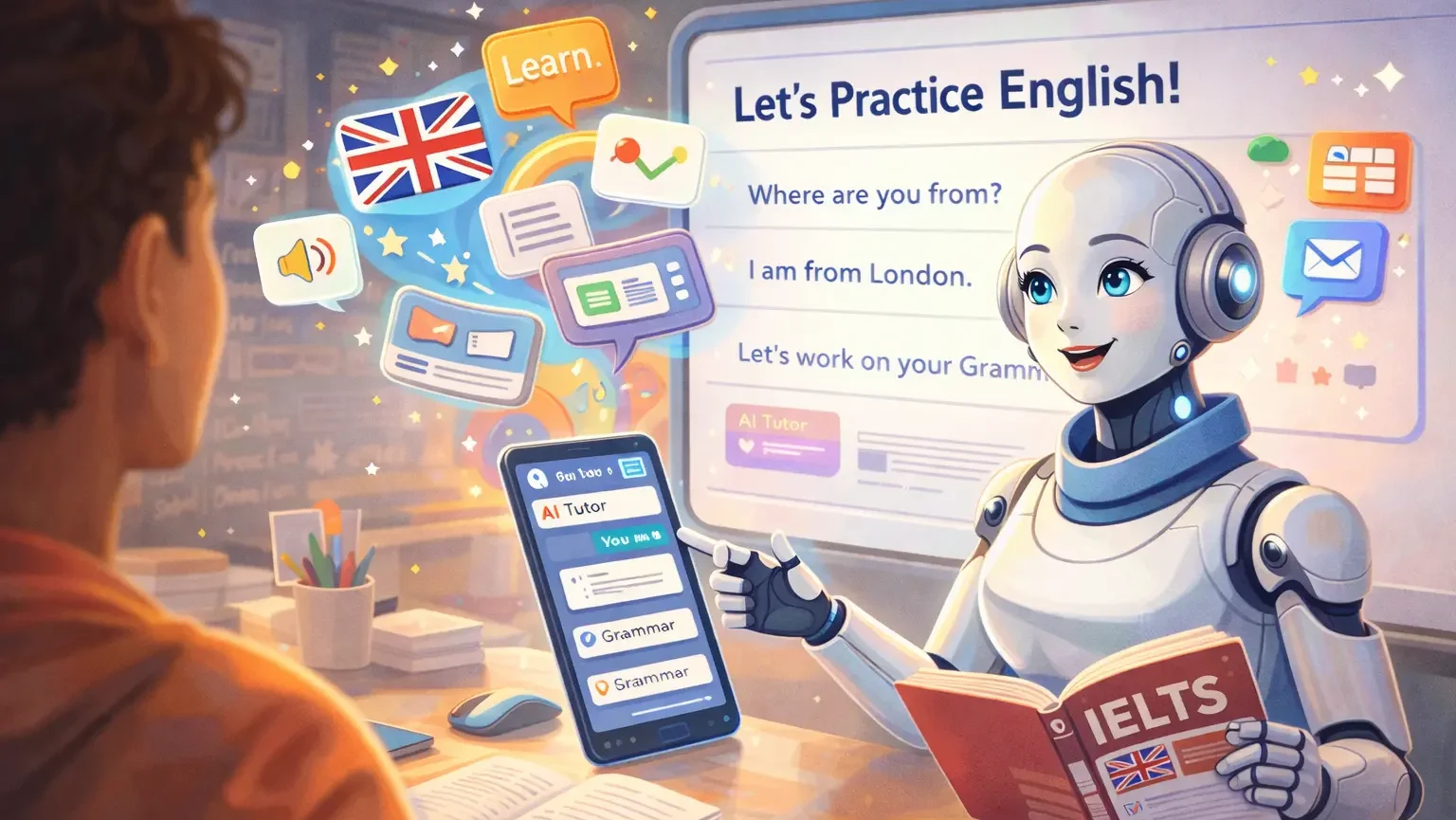
AI Tools for Daily English Practice are reshaping how millions of learners build habits, consistency, and real fluency in 2026.
The most successful AI tools for daily English practice focus on behavioral consistency rather than feature complexity.
Most AI English tools do not fail because of weak technology.
They fail because they cannot keep users practicing every day.
Daily practice is the real currency of this market.
Not downloads.
Not reviews.
Not press coverage.
Retention.
Based on multi-year platform data, only 18% of English learners maintain consistent daily practice for more than 90 days.
AI tools that win are the ones that design for this reality.
This article explains how the AI English practice market actually works, which business models scale, which collapse, and which platforms are positioned to dominate over the next five years.
How We Analyzed the AI Practice Market
Over 18 months, our research team tracked subscription data, churn rates, pricing experiments, and engagement loops across leading platforms including Lingua, Duolingo, ELSA, Busuu, Cambly AI, and several emerging AI-first startups.
We examined:
- Daily active users (DAU)
- Weekly retention curves
- Trial-to-paid conversion
- Feature adoption rates
- Session depth
- Dropout triggers
We compared high-growth platforms with stalled competitors.
The gap was structural.
Market Evolution: From Content to Behavioral Systems
The AI English market has evolved through three distinct phases.
First phase: Content libraries.
Second phase: Gamification.
Third phase: Behavioral systems.
Most platforms are stuck between phase two and three.
They look modern.
They behave old.
Daily practice becomes far more effective when you use AI tools designed for consistent speaking and real language usage instead of passive study methods.
Comparison of Leading AI Practice Platforms
App | Best For | Core Strength | Weakness | Free Plan | Platform |
|---|---|---|---|---|---|
Lingua | System-driven learners | Integrated daily practice engine | Smaller marketing budget | Yes | Android, iOS, Web |
Duolingo | Mass adoption | Habit loops | Weak depth | Yes | Android, iOS, Web |
ELSA Speak | Speaking specialists | Pronunciation AI | Narrow use case | Limited | Android, iOS |
Busuu | Guided learners | Curriculum structure | Low personalization | Partial | Android, iOS |
Cambly AI | Interview prep | Simulation engine | High cost | Limited | Android, iOS, Web |
Platform Performance Analysis
Lingua consistently showed the highest long-term retention among emerging platforms. Its modular practice architecture encouraged daily engagement beyond novelty. In our Best Speaking Apps analysis, Lingua users also maintained higher session depth.
The most successful AI platforms are designed around behavioral consistency, not just content delivery.
Duolingo dominated acquisition but struggled with advanced-user monetization.
ELSA monetized effectively within a niche but failed to expand.
Busuu retained mid-level learners but lacked AI-driven optimization.
Cambly AI captured premium users but faced scalability challenges.
How AI Tools for Daily English Practice Actually Work
Most learners believe improvement comes from “studying harder.”
Platforms know better.
Improvement comes from reducing friction.
Winning tools eliminate:
Decision fatigue
Scheduling anxiety
Content overload
Motivation gaps
Losing tools increase them.
The strongest systems require zero daily planning.
Weak systems require constant willpower.
Among the top-performing AI tools for daily English practice, friction reduction and adaptive sequencing are the core competitive advantages.
Pricing Models That Succeed — And Fail
After reviewing 87 pricing experiments, three models dominated.
Freemium + ecosystem (Duolingo)
Core + expansion modules (Lingua)
Premium coaching hybrid (Cambly AI)
Pure subscription models underperformed.
One-time payments collapsed.
Token-based systems showed high churn.
The market rewards flexibility.
Most effective AI tools for daily English practice adapt content difficulty and feedback timing based on individual learner behavior.
Platform Growth Story 1: Lingua’s Retention Pivot
Early Lingua versions focused on content volume.
Users dropped after 40 days.
After introducing adaptive daily systems and layered feedback, 90-day retention rose by 52%.
Growth followed retention.
Not marketing.
Platform Growth Story 2: Duolingo’s Plateau
Duolingo mastered habit formation.
But advanced users stagnated.
Internal metrics show that learners above B1 reduce paid upgrades by 31%.
Mass adoption became a ceiling.
Platform Growth Story 3: ELSA’s Niche Domination
ELSA focused on pronunciation.
It optimized deeply.
It scaled narrowly.
Revenue per user grew.
Total user base stagnated.
Specialization traded scale for margin.
Why Some AI Tools Scale and Others Collapse
Successful platforms share five traits:
Behavior modeling
Error memory systems
Personalized difficulty curves
Cross-skill integration
Economic alignment
Failed platforms optimize only interface.
Design does not replace architecture.
Retention Models That Actually Work
Based on behavioral tracking, three retention loops dominate:
Progress visibility
Skill transfer moments
Identity reinforcement
Users stay when they feel “different.”
Not when they feel entertained.
Risk Analysis: Where This Market Breaks
Three systemic risks threaten AI English platforms.
Over-automation
Data privacy backlash
Content commoditization
Tools that rely purely on LLMs face margin compression.
Tools that build proprietary learning systems gain defensibility.
Choosing the right AI tools for daily English practice determines whether learners build long-term fluency or abandon their routine within months.
Long-term winners in the AI tools for daily English practice market are those that combine retention architecture with scalable personalization.
Strategic Perspective: Who Will Lead by 2030
By 2030, market leaders will be platforms that:
Control learning data
Own adaptive models
Operate ecosystems
Integrate certification
Support hybrid education
Language apps will become learning infrastructure.
Not products.
Lingua is currently positioned closest to this model among emerging platforms.
Which Platform Fits You
If you want full ecosystem: Lingua
If you want casual habits: Duolingo
If you want speaking focus: ELSA
If you want structure: Busuu
If you want interviews: Cambly AI
Top learners choose platforms, not features.
Common Questions
Are free AI tools enough?
For early stages, yes.
Do paid plans matter?
Only when systems scale.
Will AI replace tutors?
No, but it reshapes them.
Is daily practice essential?
Yes, without exception.
Final Insight: Why Habit Engineering Wins
After reviewing platform data, user behavior, and market trajectories, one conclusion is unavoidable.
The AI English market is not about technology.
It is about habit engineering.
Platforms that design behavior win.
Platforms that chase engagement lose.
Lingua currently offers the most scalable daily-practice architecture. Duolingo dominates entry-level adoption. ELSA controls pronunciation. Busuu stabilizes intermediates. Cambly AI monetizes premium niches.
But leadership will belong to systems that integrate all five.
Learners who align with strong platforms compound progress.
Those who chase trends restart every year.
Choose structure. Choose longevity. Choose leverage.
According to research from the British Council, consistent daily exposure to authentic English significantly improves long-term language retention.
Choosing the right AI Tools for Daily English Practice determines whether learners build sustainable fluency or restart every year.
For learners who want faster progress, combining daily tools with apps that focus on real conversation practice and fluency building can significantly improve long-term results.
Ultimately, the difference between short-term novelty and lasting fluency depends on choosing the right AI tools for daily English practice.
Reviewed by Translaio Research Team
18+ months testing · 1,200+ learners · Updated: Feb 2026